


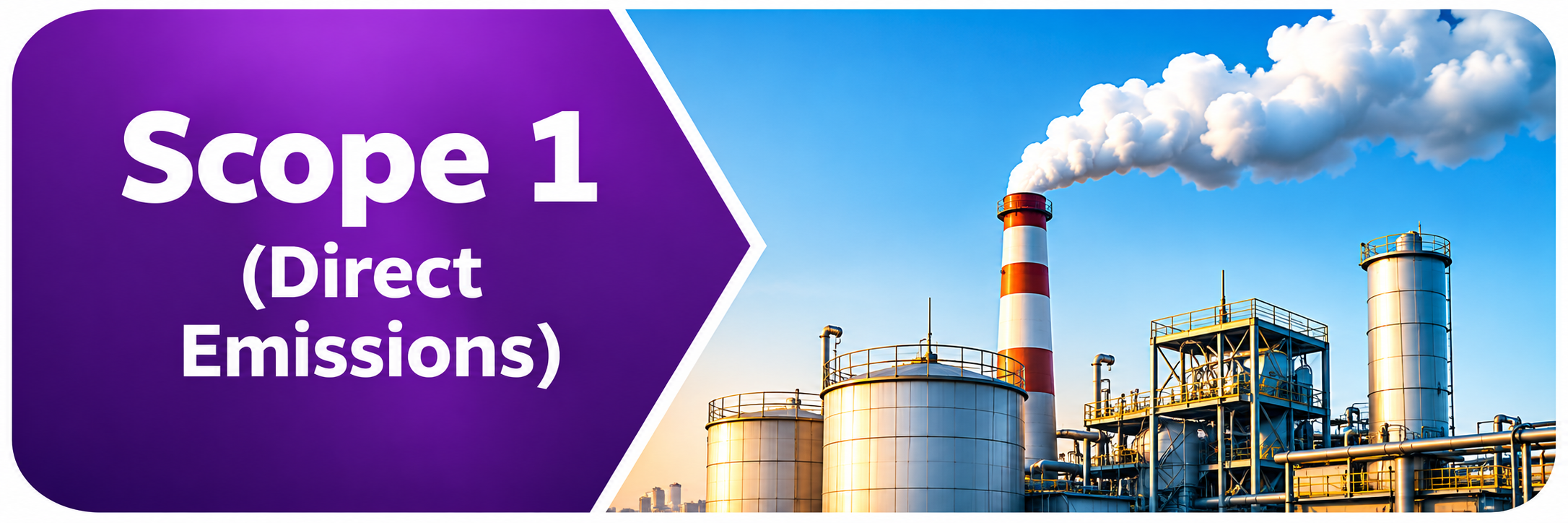
Scope 1:
These emissions occur directly from source that a company owns or controls. For example, direct use of fuels in vehicles, boilers and furnaces. Also, emissions from production is owned or controlled process equipment. Here the emissions are generated at the location where consumption takes place.
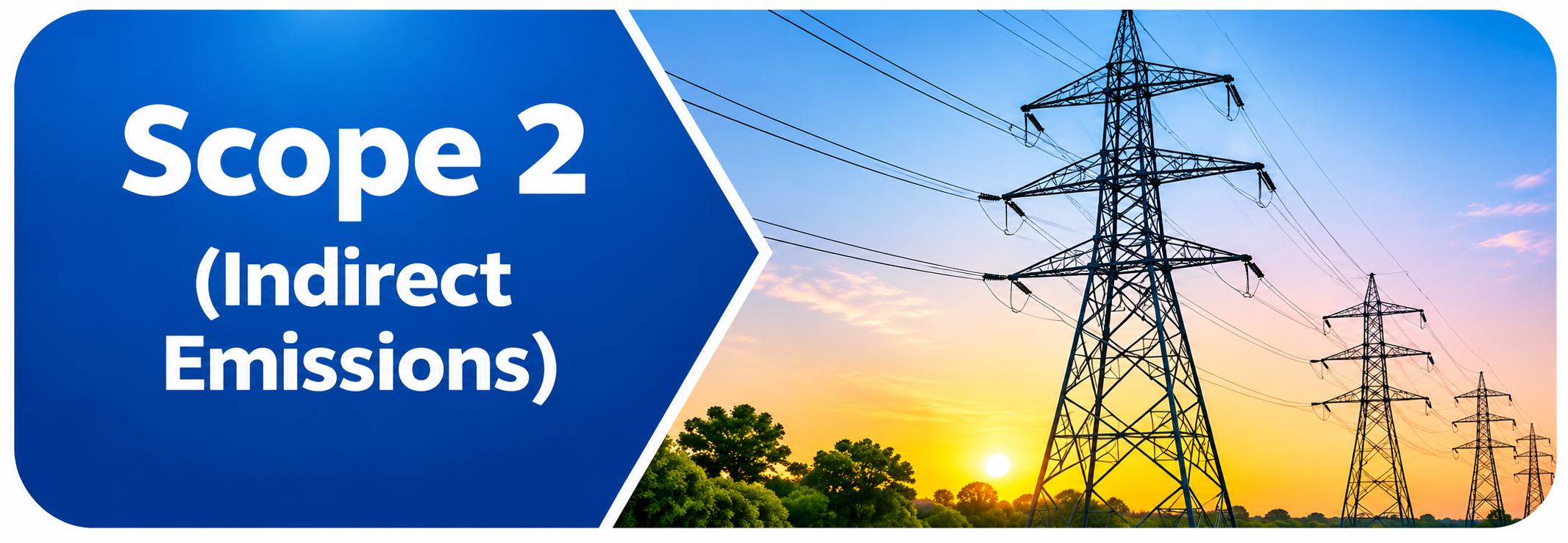
Scope 2:
This is an indirect generated from the purchased electricity consumed by the company for use in its facilities. Here the emissions occur outside the boundries. For example: Purchased electricity from power plants to support manufacturing processes, lighting and other needs of company owned and operated assets.
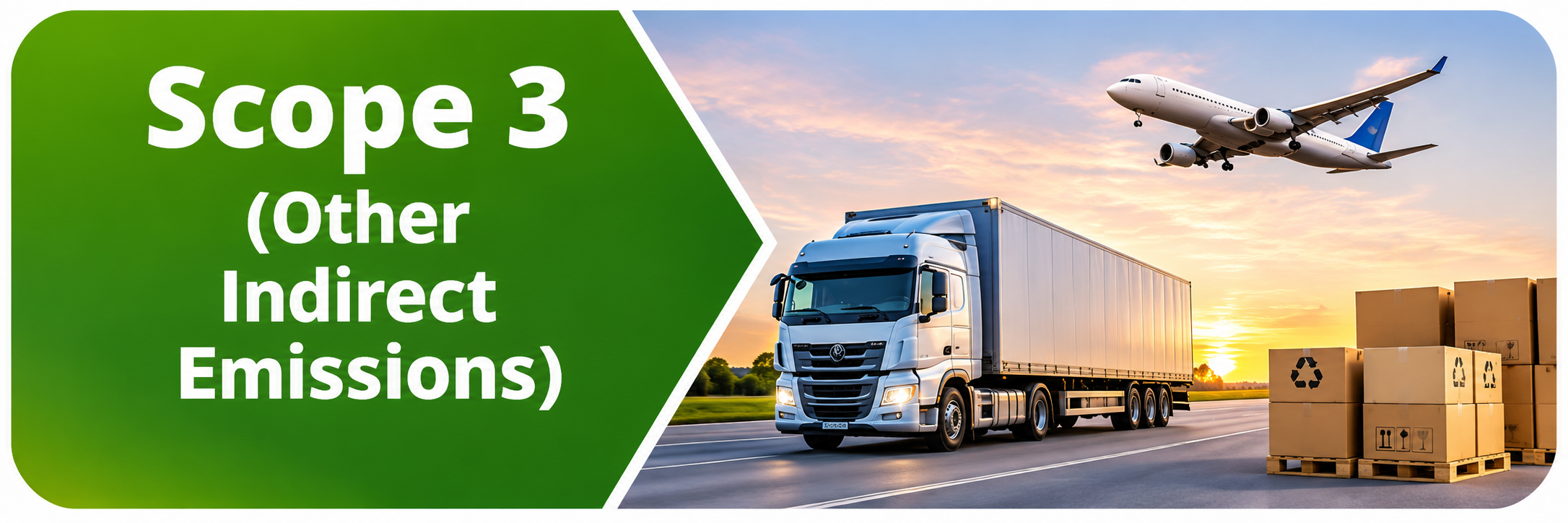
Scope 3:
This is for the treatment of all other indirect emissions. These emissions are due to supporting activities not owned or controlled by the company. For example: Purchased goods and services, business travel and employee commuting, transportation of products to customers, manufacturing waster, etc.
In Simple Terms
Scope 1
are direct emissions from sources owned or controlled by the company

Scope 2
are indirect emissions from use of grid-supplied electricity, heat, steam or cooling

Scope 3
are indirect emissions associated with company's value chain
There are sources and facilities whose emission information is still incomplete. Uncertainities so associated with them are categorized as;

01
Scientific Uncertainities
aries when the science of the actual emission process is not completed understood. ("GHG Protocol guidance on uncertainity assessment in GHG inventories . . .").

02
Estimation Uncertainities
aries where data is not specific from different regions, sectors and activities. It becomes tricky to apply values as the result accuracy is not gauranteed.